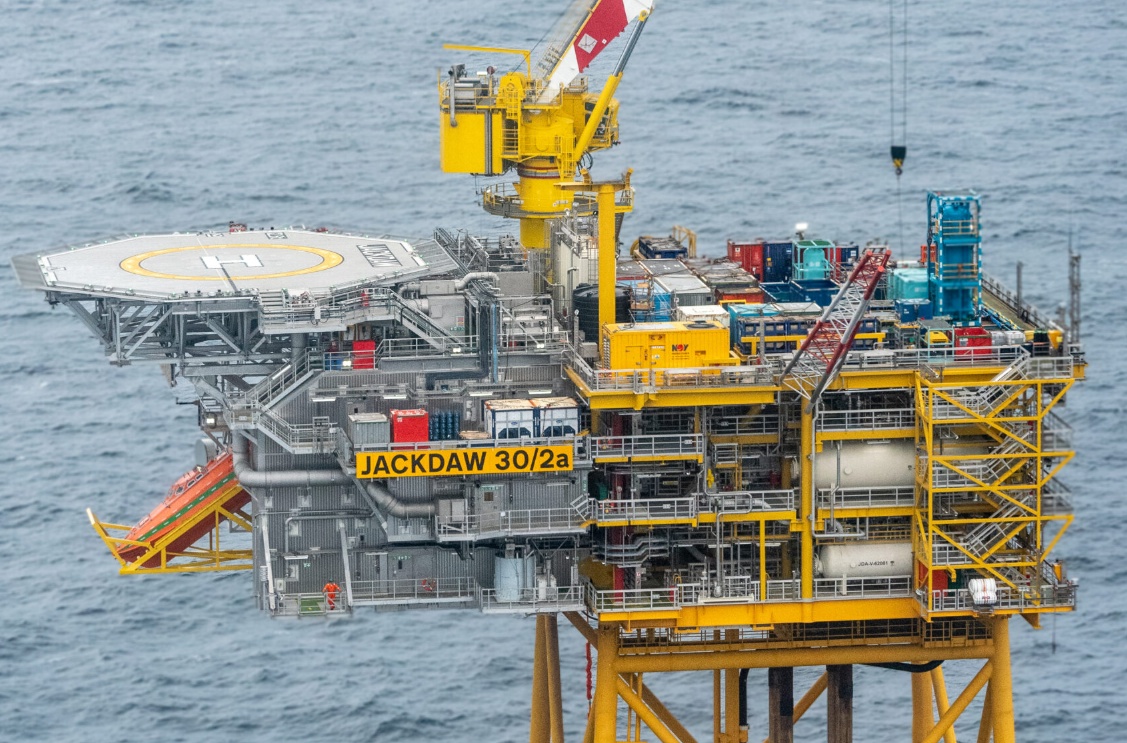
The UK has approved the £2.1bn ($2.8bn) Jackdaw gas development in the North Sea, opening the way for production as early as the end of October, Splash247 reported on 22 October. Operator Adura, the UK upstream joint venture of Shell and Equinor, said the field could start supplying gas within weeks because most offshore facilities were already in place.
The North Sea Transition Authority issued new development consent after energy secretary Miatta Fahnbulleh agreed that the project could advance under revised environmental assessment requirements. The decision ends an approval impasse stemming from a 2025 court ruling, which made the original 2022 consent ineffective because the assessment had not sufficiently addressed emissions arising from burning the gas.
Work on the development was permitted to carry on while the application was reconsidered, although gas production remained dependent on renewed authorisation. The updated review examined emissions from the gas’s subsequent use alongside other environmental effects. Jackdaw will also use existing offshore infrastructure, a feature the regulator cited in discussing both its environmental performance and its role in domestic supply.
Situated roughly 225 km east of Aberdeen, the high-pressure, high-temperature gas-condensate field is forecast to reach peak production of about 40,000 barrels of oil equivalent a day. According to the operator’s estimate, its peak gas supply could meet heating needs equivalent to those of 1.4m UK homes. Splash247 reported government estimates that Jackdaw could lift domestic gas production by around 6% at peak and sustain production for as long as 11 years.
The government also forecasts a £2.9bn economic contribution, with 273 existing jobs protected and 27 additional positions created. Shell described the approval as an indication of greater regulatory certainty, while climate campaigners argued that it conflicted with UK emissions objectives. Adura has called for a similar assessment of the outstanding consent application for Rosebank, another major North Sea development affected by the same legal dispute.