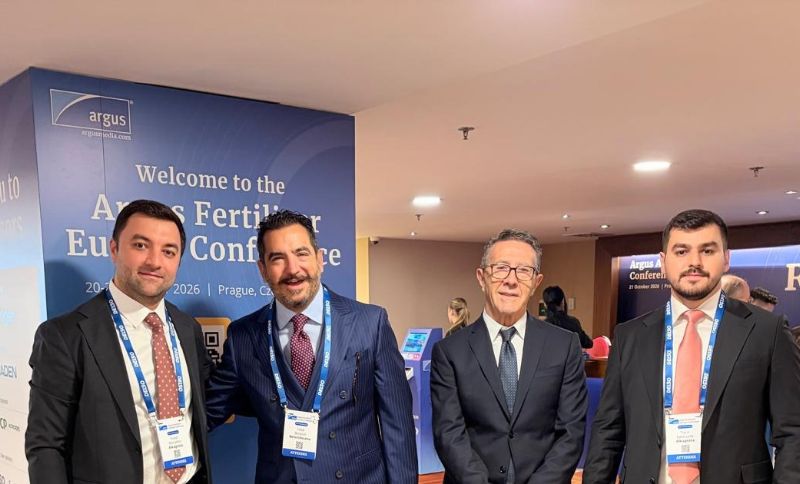
Alkagesta said it took part in the Argus Fertilizer Europe Conference 2026 in Prague on 20–22 October, where discussions covered European fertiliser regulation, trade and supply risks. The company was represented throughout the three-day event by Fertilizer Desk Lead Vusal Muradov and Fertilizer Trader Tural Sabirzade, according to its account of the gathering.
Under a theme linking carbon borders with trade, the conference brought producers, traders, importers and policymakers together to consider changes affecting the European market. Alkagesta said the opening programme examined the Carbon Border Adjustment Mechanism, the EU Emissions Trading System and tariff reforms. Discussions focused on what those regulatory developments could mean for fertiliser prices, the movement of traded supplies and supply-chain planning.
The first day of the main conference turned to Europe’s competitiveness against the geopolitical backdrop. Sessions considered how supply interruptions, volatile energy prices and changes in sourcing were influencing fertiliser markets. Shipping, the ability of supply chains to withstand disruption and the outlook for natural gas were also prominent subjects, Alkagesta reported. Its account presented these issues as relevant to the operating conditions facing fertiliser traders.
The following day covered specialty and bio-organic fertilisers, alongside end-user views on food security and farm economics. Delegates also examined the prospects for clean ammonia as a possible response to energy and geopolitical risks. The closing agricultural market update addressed the effects of the Middle East conflict on planting seasons and crop yields. Alkagesta linked that discussion to wider pressures on global energy and commodity supplies during 2026.
The company described its attendance as an opportunity to engage with participants influencing European fertiliser markets and to strengthen relationships supporting its regional trading activities. Its report centred on the conference agenda and commercial engagement, rather than announcing a transaction or providing freight-rate, shipment-volume or vessel-fixture details.