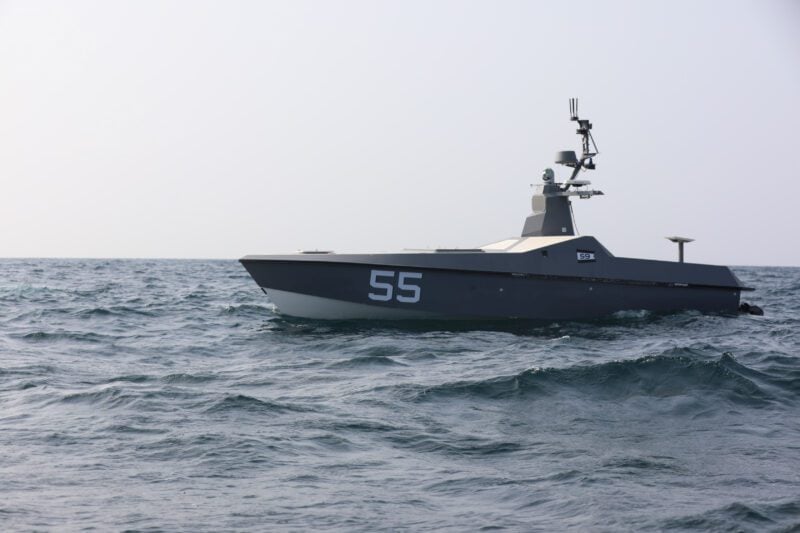
US Navy experience with unmanned vessels in the Persian Gulf should provide the basis for wider operational deployment, Chris Servello argues in an opinion article published by gCaptain. His assessment highlights rescue, surveillance and mine-countermeasure work around the Strait of Hormuz, where commercial shipping operates alongside naval forces in confined waters.
According to the article, BlackSea Technologies, now part of AEVEX, responded to a developing requirement for unmanned mine-countermeasure capabilities in the Persian Gulf. Servello describes mines as a threat to shipping through Hormuz and argues that unmanned equipment offers a way to address that danger while limiting exposure for sailors and costly naval vessels. He also cites the company’s Global Autonomous Reconnaissance Craft as a means of expanding surveillance without assigning a crewed warship to every task.
The report gives a separate example involving a 24-foot Saronic Corsair unmanned surface vessel. In June, the craft helped rescue two Army aviators who had gone down near Oman, recovering them and taking them to a location for helicopter evacuation. Servello credits Fifth Fleet and Task Force 59 with developing experience in operating unmanned systems alongside crewed forces, integrating sensors and improving awareness of maritime activity through work with industry and regional partners.
Beyond the Gulf, the Leidos-built Seahawk medium unmanned surface vessel has deployed with the USS Theodore Roosevelt Carrier Strike Group, gCaptain’s article says. Seahawk and sister vessel Sea Hunter previously supported development of autonomous navigation, collision avoidance, communications and joint operations with crewed vessels. Servello argues that deployment with an operational strike group should help establish practical arrangements for control, maintenance and employment, including when communications are impaired.
The article’s central recommendation is to move proven capabilities into routine service without abandoning experimentation. Servello proposes prioritising surveillance, scouting, screening, electronic warfare and selected logistics duties, while continuing to develop more demanding missions. Within the next year, he argues, the Navy should identify deployment-ready roles, assign organisational responsibility and establish the training, maintenance and support arrangements needed to sustain them. He also calls for clear requirements and common standards rather than attempting to make a single vessel fulfil every mission.