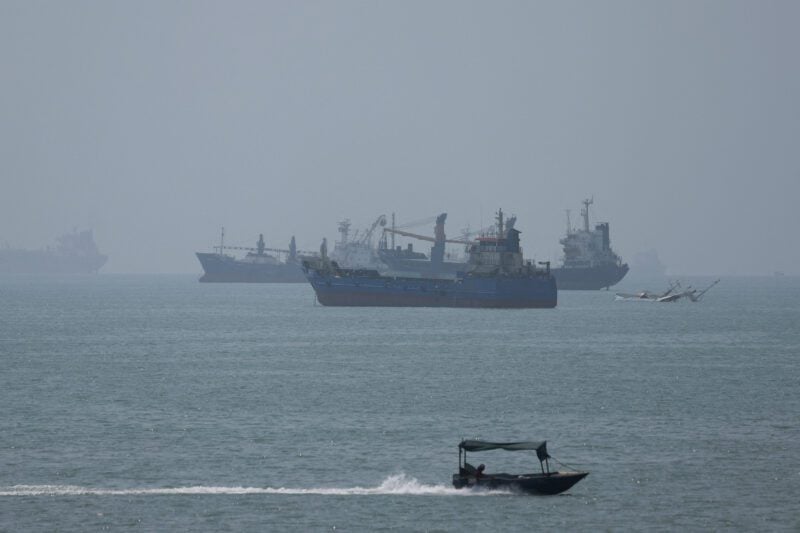
Persistent attacks on commercial shipping in the Strait of Hormuz are keeping transport risks and fuel costs elevated despite substantial oil flows through the waterway, according to a Bloomberg report carried by gCaptain. Shipments stand at about 80% of prewar levels, but the threat to vessels has driven up insurance costs as US President Donald Trump signals possible renewed strikes against Iran.
The economic pressure runs both ways. The report says the US blockade has sharply curtailed Iran’s oil exports, depriving its military of an important funding source and damaging its $300 billion economy. Only a small fraction of the prewar export volume of 2 million barrels a day is leaving by land. Meanwhile, expensive oil transport through Hormuz is helping sustain high US fuel prices ahead of the midterm elections.
Tanker operators nevertheless continue to move cargoes. According to the report, supertanker owners are earning tens of millions of dollars for transits, while crews can receive several months’ wages for a few days navigating the danger zone. US Central Command says roughly 95% of ships pass through without incident. A US official said American forces coordinate with operators on schedules, routes and vessel numbers, then arrange surveillance and protection, largely using aircraft.
The consequences of attacks have become more severe, even without an increase in their frequency, the official said. October brought a record of at least 28 open-source reports of damage to shipping in the strait. A quarter of reports during the month’s first two weeks involved engine-room strikes, which can disable vessels. The International Maritime Organization estimates that 121 incidents have occurred in Hormuz and the surrounding region since the war began, with 24 confirmed seafarer deaths.
Further military action may not remove the threat. Jim Lamson, a visiting research fellow at King’s College London and former CIA analyst, said stockpiled components allow Iran to keep assembling anti-ship weapons despite damage to its manufacturing capacity. Trump has indicated that attacks could resume after the 3 November midterms. Bloomberg Economics chief emerging markets economist Ziad Daoud warned that intensified fighting could lift oil prices into a $120-$130 range, adding another potential cost to a trade route already carrying a substantial security premium.