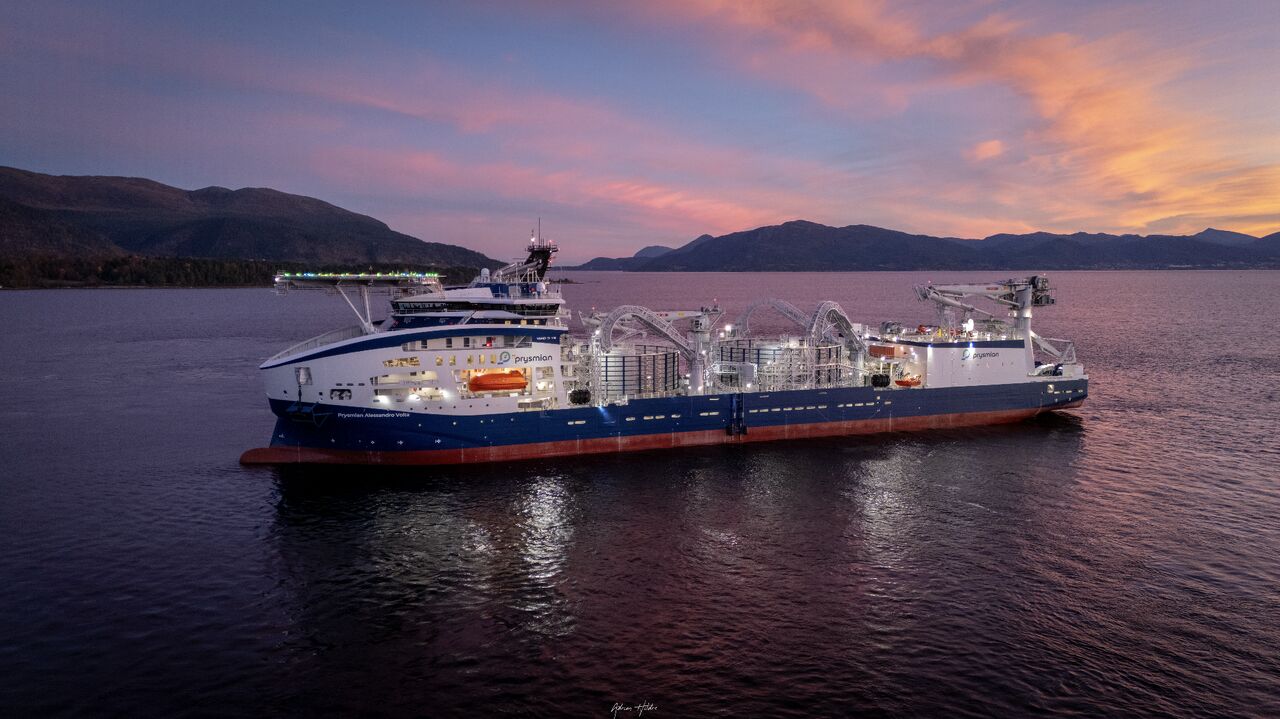
Prysmian’s new cable-laying vessel Alessandro Volta has started sea trials in Norway, following the completion of construction there, Offshore Energy reported. Both the cable company and Norwegian ship designer and builder VARD confirmed on 23 October that the vessel was undergoing trials. The report places the trials after a construction programme spanning the builder’s Romanian yard and Norway.
Work on the vessel began in September 2024 at VARD’s Tulcea shipyard in Romania. Its hull was erected there in September 2025, before the vessel departed Romania in mid-January this year for Norway. Construction was subsequently completed in Norway, ahead of the sea trials now reported by the two companies. The move from Tulcea marked the transfer between the Romanian and Norwegian stages of the build.
At 192.8 metres long, Alessandro Volta is the largest vessel VARD has launched, according to the shipbuilder, as cited by Offshore Energy. The cable layer uses VARD’s 9 18 design. That length puts the vessel just below the 193-metre figure used in the report’s headline, while the builder’s size claim specifically concerns vessels it has launched.
The vessel’s cable-handling equipment includes three carousels with a combined load capacity of 19,000 tonnes. Its tensioner system can sustain a maximum tension of 60 tonnes, and the vessel is capable of laying power cables in water depths of up to 1,500 metres, the outlet reported. These figures describe its cable capacity, handling equipment and operating depth, rather than results from the ongoing sea trials.
Alessandro Volta will also carry Prysmian’s new heavy-duty plough, developed by UK-based SMD. Offshore Energy reported that the latest-generation equipment will be deployed on both Alessandro Volta and Monna Lisa, making the new cable layer one of two named vessels set to use the plough.